


#Technology
#Banking
Cyber Safety Tips for Senior Citizens: Comprehensive Guide to Digital Protection in 2026
- 10 Mar, 2026
- 4 Mins Read
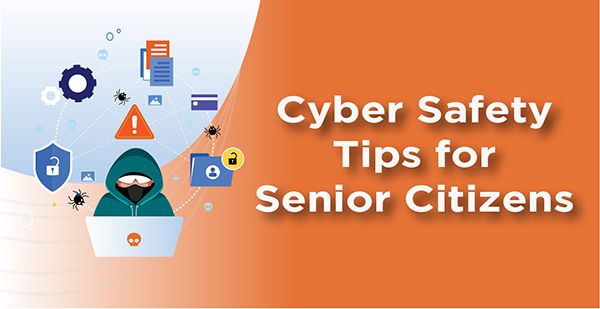
Whether you are a senior looking to secure your accounts or a caregiver helping a loved one, this guide outlines the most critical cyber safety practices to ensure a secure and confident online experience.
Understanding the Evolving Threat Landscape
Cybercriminals often target older adults because they are perceived to have substantial savings and may be less familiar with the latest digital threats. In 2026, several specific types of scams have become increasingly prevalent:
• Digital Arrest Scams: This high-pressure tactic involves scammers impersonating law enforcement officers (from agencies like the CBI, Police, or NCB) via video call. They claim the victim is involved in a serious crime and place them under a fake "digital arrest," demanding immediate money transfers to "verify" accounts or avoid physical arrest.
• AI Voice Cloning and Deepfakes: Using just a few seconds of audio from social media, scammers can clone a relative's voice. They then call the senior, claiming to be a grandchild or child in distress, urgently requesting money for a fake emergency.
• Government and Bank Impersonation: Fraudsters pose as officials from the Income Tax department, Medicare, or a bank, alleging issues with accounts, tax returns, or benefit payments to extract personal information or direct payments.
• Tech Support Fraud: A pop-up or unsolicited call claims the user's computer is infected. The "support agent" then requests remote access to the device, which they use to install malware or steal sensitive data.
Core Cyber Safety Practices for Seniors
Adopting the "Core 4" safety habits can significantly reduce the risk of falling victim to a cyberattack. These practices are the foundation of digital security for users of all ages.
1. Strengthen Your Account Access
The weakest link in most digital security setups is the password. To move beyond vulnerable credentials:
• Use Passphrases: Instead of simple passwords, use long passphrases consisting of random, nonsensical words (e.g., BlueElephantCoffeeSky#42). Aim for at least 16 characters.
• Unique Passwords for Every Account: Never reuse passwords. If one account is compromised, a unique password prevents a hacker from accessing your other accounts.
• Leverage a Password Manager: This "digital vault" securely creates and stores complex passwords for you, so you only need to remember one master password.
• Enable Multi-Factor Authentication (MFA): This is one of the most powerful defences available. MFA requires a second form of identification—like a code sent to your phone or a fingerprint scan—to log in, making it nearly impossible for a hacker to enter your account with just a password.
2. Exercise Scepticism with Unsolicited Contact
In 2026, the most effective defence is a "verify first" mindset.
• The SLAM Method: Before acting on any email, check the Sender's address, hover over Links to see the true destination, avoid suspicious Attachments, and evaluate the Message for urgency or errors.
• Disconnect and Verify: If you receive a call or video call from an "official" threatening legal action or a "relative" in distress, hang up immediately. Call the person or the official department back using a trusted number you find yourself—not the one provided by the caller.
• Beware of Urgent Language: Scammers thrive on creating panic. Any message that pressures you to act immediately to avoid a "suspension," "arrest," or "loss of funds" is almost certainly a scam.
3. Secure Your Devices and Network
Keeping your hardware and software up to date ensures you have the latest security patches against known vulnerabilities.
• Enable Automatic Updates: Configure your computer, smartphone, and tablet to install updates automatically for operating systems and apps.
• Use Reputable Antivirus Software: A trusted security solution can block risky sites, detect malicious files, and provide real-time protection during online payments.
• Secure Your Home Wi-Fi: Change the default username and password for your home router. Ensure it uses strong encryption (WPA3).
**• Avoid Public Wi-Fi for Sensitive Tasks: Never log into your bank or shop online using public Wi-Fi at coffee shops or airports. If you must use a public network, use a Virtual Private Network (VPN) to encrypt your connection.
4. Protect Your Personal Information
Your data is valuable, and once shared, it is difficult to retrieve.
• Limit Social Media Sharing: Be cautious about sharing birth dates, addresses, or travel plans publicly. Adjust your privacy settings to ensure only known friends can see your posts.
• Be Sceptical of Online Quizzes: Harmless-looking surveys or quizzes are often used to collect data for identity theft or to guess your security questions.
• Only Download from Official Stores: Only install applications from the Apple App Store or Google Play Store. Avoid third-party app stores or links that pop up and encourage a download.
Dealing with "Digital Arrest" Scams
Given the rise of these high-pressure scams in India, it is vital to remember these golden rules:
• There is no such thing as "Digital Arrest": In India, legitimate law enforcement agencies will never interrogate you, threaten you, or demand money over a video call. An arrest requires physical presence and a legal warrant.
• Never Share OTPs or PINs: No bank or government official will ever ask for your OTP, UPI PIN, or bank password.
• Isolation is a Red Flag: If a caller warns you not to speak to family members or to keep the call a secret, they are trying to isolate you so you cannot seek help. Immediately inform a trusted family member or friend.
What to Do If You Are Targeted
Despite your best efforts, mistakes can happen. If you suspect you have been scammed or have shared sensitive information:
1. Stop Communication: Immediately disconnect the call or block the sender.
2. Contact Your Bank: If you shared financial details or made a transfer, call your bank immediately to freeze your accounts and block transactions.
3. Report to Authorities: In India, call the National Cybercrime Helpline at 1930 or visit the National Cyber Crime Reporting Portal at cybercrime.gov.in.
4. Notify Your "Trusted Contact": Many investment accounts allow you to name a trusted third party that the firm can contact if they notice suspicious activity. Inform this person so they can help monitor your accounts.
Conclusion: Digital Confidence through Awareness
Cyber safety in 2026 is about building good habits and staying alert in everyday moments. By strengthening your passwords, enabling MFA, and maintaining a healthy scepticism of unsolicited messages, you can enjoy all the benefits of the digital world with confidence. Remember, it is never rude to verify a caller's identity or to hang up on a suspicious request—it is the smartest way to protect your peace of mind and your hard-earned savings.
Bank with us your way

Banking at Fingertips

Fast, easy & secure banking
Anywhere, anytime banking
Cashless banking


Version : -20.0.61
SHA256 : -28ad5c5eb4410cf33bdf58e8886e40b420572cb024321ff8c86f2a715e996b12
SHA1 : -a4f6e08626c6c548a8af1346f75770a7128d9f00

Version : -15.0.51
iOS user cannot install application other than the app store. We upload archive file which gets converted to ipa after upload to app store. Checksum of ipa and archive will never be same so checksum will not be applicable for iOS binary.


We Always put you first


We, at Suryoday Bank, are proud to have served over 2.8 million satisfied customers and enabled them, in their pursuit of financial security and prosperity, to achieve a brighter financial future.
FD-Backed Credit Card
Earn attractive interest rates on FD and enjoy #cashback on credit card spends with FD-Backed Suryoday SFB Secured Credit Card.


Need Help?
Get in touch with our Smile Centre

Our Strong Smiling Family
At Suryoday, we foster a positive workplace culture with employee initiatives that inspire, empower and celebrate our team's growth and well-being.


Our CSR Initiatives


Spandan
A Preventive Health Program
For Women & Children


Explore. Discover. Learn


Protect your hard-earned money by ensuring your KYC is always updated and beware of KYC fraud. Stay Alert. Stay Safe.

We are registered with DICGC. Know more about it

Secure your family’s future effortlessly, register your nomination today. Enjoy seamless claim settlement and peace of mind for generations to come.


Celebrate Our Special Offers
Exciting rewards ready to delight you


About us
About us
Products & Services
Products & Services
Ways to bank
Ways to bank
Rate of Interest
Rate of Interest
Schedule of charges
Schedule of charges
Forms Center
Forms Center
Resources
Resources
Careers
Careers
Smile center
Smile center
Investor relations
Investor relations
Miscellaneous
Miscellaneous
© 2026 Suryoday Small Finance Bank Limited
Apply for Savings / Current Account | Book Fixed Deposit (for New Customers) | Book Fixed Deposit (for Existing Customers) | Apply for Home Loan | Apply for Vehicle Loan
Please notify any unauthorized transaction on 1800 266 7711 or email at smile@suryodaybank.com immediately. Do not share OTP, PIN or any other sensitive banking details.
*Interest rates are subject to change. T&C Apply. DICGC insurance cover applicable.


Get Started with MSME Loan
Check Your Eligibility in 3 Minutes