


#Banking
#Finance
How to Get a Credit Card Without Income Proof: A Complete Guide
- 03 Jan, 2026
- 4 Mins Read
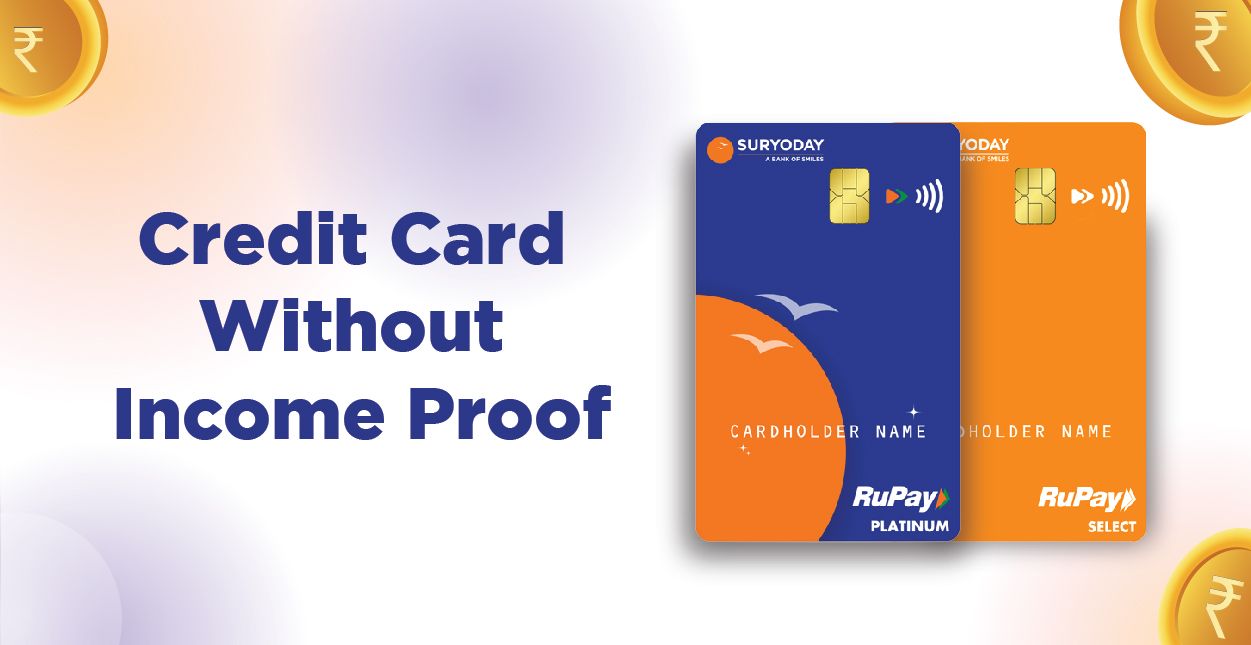
By understanding the alternative pathways and the specific financial products designed for lower-documentation applicants, you can unlock the benefits of digital payments and, more importantly, begin building a robust credit history. This guide explores the most effective strategies to secure a credit card without traditional income proof, ensuring you can manage your finances with the flexibility and rewards that credit cards offer.
Why Lenders Request Income Proof
Before exploring the alternative routes, it is helpful to understand the underlying logic of the traditional application process. A credit card is essentially an unsecured loan. When a financial institution issues a card, they are trusting the applicant to repay the funds spent. Income proof—like salary slips or Form 16—acts as a primary indicator of repayment capacity. It helps the lender:
• Verify financial stability and consistent cash flow.
• Determine an appropriate credit limit that the user can realistically manage.
• Minimize the risk of defaults or late payments.
However, modern banking acknowledges that financial discipline and stability can be demonstrated through various other markers.
1. Secured Credit Cards
The most reliable and accessible route to getting a credit card without income proof is through a Secured Credit Card. As the name suggests, this card is secured against a Fixed Deposit (FD) held with the bank.
How it works
You open a Fixed Deposit with a bank (minimum amounts vary, often starting between ₹5,000 and ₹20,000). The bank then issues a credit card where your FD acts as collateral.
• Credit Limit: Typically, the credit limit is set at 80% to 90% of your FD amount.
• Documentation: Since the bank holds the FD as security, they do not require salary slips or ITR.
• Asset Appreciation: Your FD continues to earn interest even while it serves as security for your card.
Benefits of Secured Cards
• High Approval Rates: Because the risk to the bank is minimized by the collateral, approval is nearly guaranteed.
• Credit Building: These cards are reported to credit bureaus like CIBIL. By making timely payments, you can build a strong credit score from scratch.
• Transition Path: Consistent and responsible usage of a secured card for 12–18 months often makes you eligible for an upgrade to a regular, unsecured credit card.
2. Leveraging Relationship Value and Pre-approved Offers
If you have maintained a savings or current account with a bank over a long period, your internal banking history often outweighs the need for external income documents. Banks monitor the Average Monthly Balance (AMB) and the frequency of transactions to gauge financial health.
• Pre-approved Offers: Loyal customers with healthy balances frequently receive pre-approved credit card offers. These are often "paperless" and do not require additional income verification because the bank has already vetted your creditworthiness internally.
• Relationship-Based Approval: You can approach your relationship manager and provide bank statements for the last 6–12 months. Consistent credits—even from freelance projects, rental income, or pension—can effectively demonstrate financial stability.
3. Add-on Credit Cards (Supplementary Cards)
For those who may not have an independent income stream, such as students or homemakers, an Add-on Card is an excellent alternative. If a family member (spouse, parent, or sibling) holds a primary credit card and has a good credit score, they can apply for a supplementary card for you.
• Eligibility: No independent income proof or credit score is required for the add-on cardholder.
• Shared Responsibility: The credit limit is shared with the primary card, and the legal responsibility for bill payment lies with the primary cardholder.
• Feature Parity: Add-on cards usually enjoy the same rewards, lounge access, and insurance benefits as the primary card.
4. Specialized Student Credit Cards
Many banks offer "starter" cards designed specifically for college students. These products focus on education and early financial responsibility rather than current earnings.
• Requirements: Instead of income proof, banks typically ask for a valid College ID and enrolment proof.
• Controlled Limits: These cards often come with lower credit limits, which helps prevent overspending while the student learns to manage debt.
5. Alternative Income Documentation
If you are a freelancer or self-employed, you may not have a salary slip, but you likely have a paper trail of earnings. Lenders are increasingly accepting alternative documents to verify repayment capacity:
• Bank Statements: A 6-month statement showing regular credits from various clients.
• GST Returns: For business owners or registered freelancers, GST filings are a credible indicator of business volume.
• Form 26AS: This document reflects Tax Deducted at Source (TDS), providing a government-verified record of various income streams.
Summary
The following options represent the most accessible pathways for obtaining a credit card when traditional income documentation is unavailable:
• Secured Credit Cards: These require a Fixed Deposit (FD) to be maintained with the bank. They are suitable for almost anyone and are one of the most effective tools for building or repairing a credit score.
• Add-on Credit Cards: These are issued based on a family member's primary credit card. This is often the best choice for homemakers, students, or retired individuals whose spouse or children already hold a primary card.
• Pre-approved Credit Cards: These are offered to existing customers who maintain a healthy average monthly balance or have a long-standing relationship with the bank. They typically require zero additional documentation as the bank relies on internal data.
• Student Credit Cards: These are granted based on a valid College ID or proof of enrolment. They are specifically tailored for full-time students to help them manage small expenses and establish a credit profile early.
Key Considerations Before Applying
• Credit Score Awareness: If you already have a credit history (perhaps from a mobile EMI or a small personal loan), verify your score before applying. A CIBIL score above 750 significantly enhances your profile, making it easier to secure a card even with minimal paperwork.
Managing your finances with a credit card provides convenience, security, and a vital path toward future high-value financing, such as home or vehicle loans. By selecting the right entry point and maintaining disciplined repayment habits, you can establish a robust financial foundation regardless of your current employment status.
Bank with us your way

Banking at Fingertips

Fast, easy & secure banking
Anywhere, anytime banking
Cashless banking


Version : -20.0.55
SHA256 : -abe486fa54e7202b12e4675cbf405ea09296c4b7eb8baad521fd3e6641795346
SHA1 : -6d63a78e65b45c210d22eda74246faceb37828d4

Version : -15.0.50
iOS user cannot install application other than the app store. We upload archive file which gets converted to ipa after upload to app store. Checksum of ipa and archive will never be same so checksum will not be applicable for iOS binary.


We Always put you first


We, at Suryoday Bank, are proud to have served over 2.8 million satisfied customers and enabled them, in their pursuit of financial security and prosperity, to achieve a brighter financial future.
FD-Backed Credit Card
Earn attractive interest rates on FD and enjoy #cashback on credit card spends with FD-Backed Suryoday SFB Secured Credit Card.


Need Help?
Get in touch with our Smile Centre

Our Strong Smiling Family
At Suryoday, we foster a positive workplace culture with employee initiatives that inspire, empower and celebrate our team's growth and well-being.


Our CSR Initiatives


Spandan
A Preventive Health Program
For Women & Children


Explore. Discover. Learn


Protect your hard-earned money by ensuring your KYC is always updated and beware of KYC fraud. Stay Alert. Stay Safe.

We are registered with DICGC. Know more about it

Secure your family’s future effortlessly, register your nomination today. Enjoy seamless claim settlement and peace of mind for generations to come.


Celebrate Our Special Offers
Exciting rewards ready to delight you


About us
About us
Products & Services
Products & Services
Ways to bank
Ways to bank
Rate of Interest
Rate of Interest
Schedule of charges
Schedule of charges
Forms Center
Forms Center
Resources
Resources
Careers
Careers
Smile center
Smile center
Investor relations
Investor relations
Miscellaneous
Miscellaneous
© 2026 Suryoday Small Finance Bank Limited
Apply for Savings / Current Account | Book Fixed Deposit (for New Customers) | Book Fixed Deposit (for Existing Customers) | Apply for Home Loan | Apply for Vehicle Loan
Please notify any unauthorized transaction on 1800 266 7711 or email at smile@suryodaybank.com immediately. Do not share OTP, PIN or any other sensitive banking details.
*Interest rates are subject to change. T&C Apply. DICGC insurance cover applicable.


Get Started with MSME Loan
Check Your Eligibility in 3 Minutes